


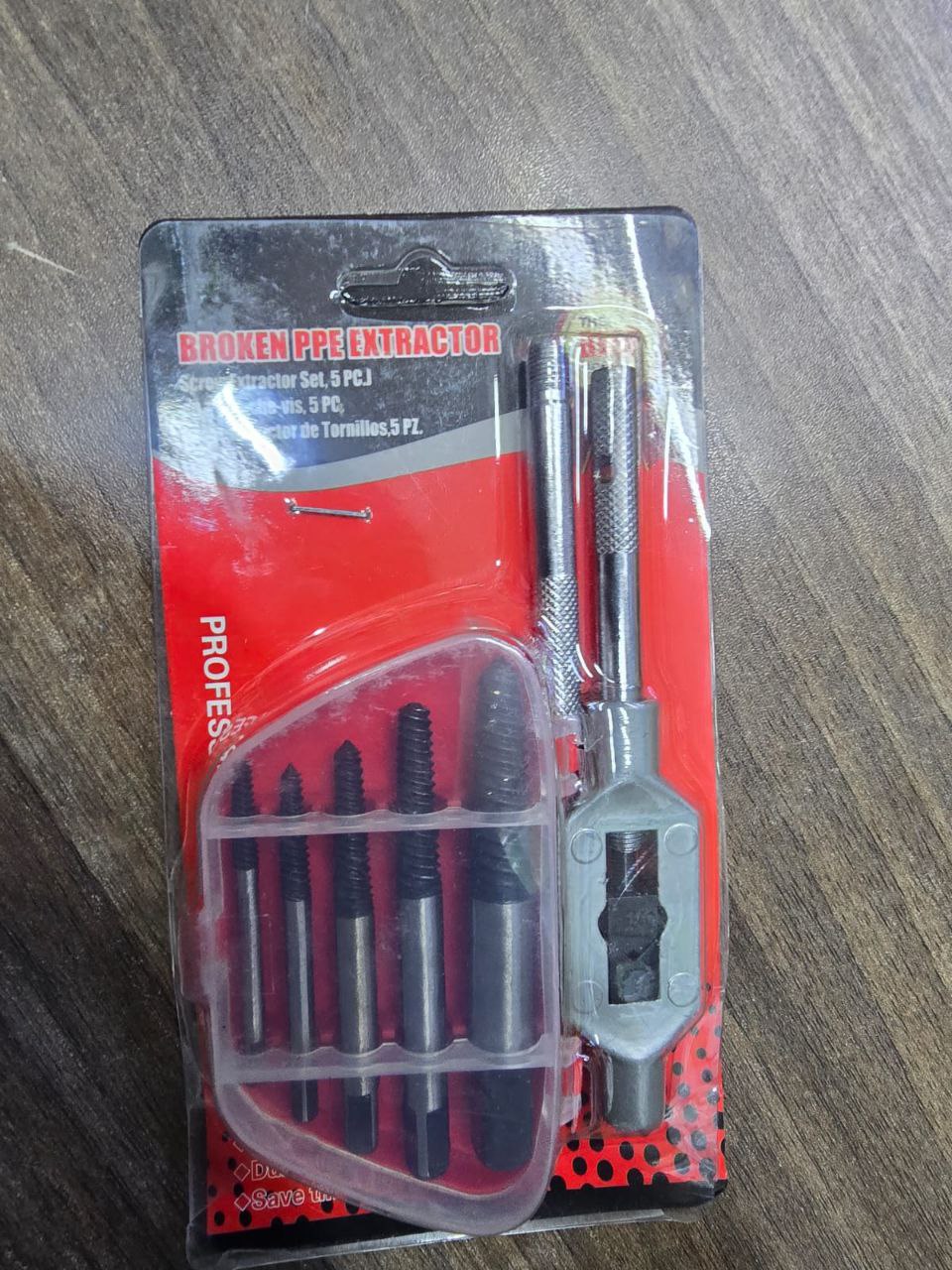
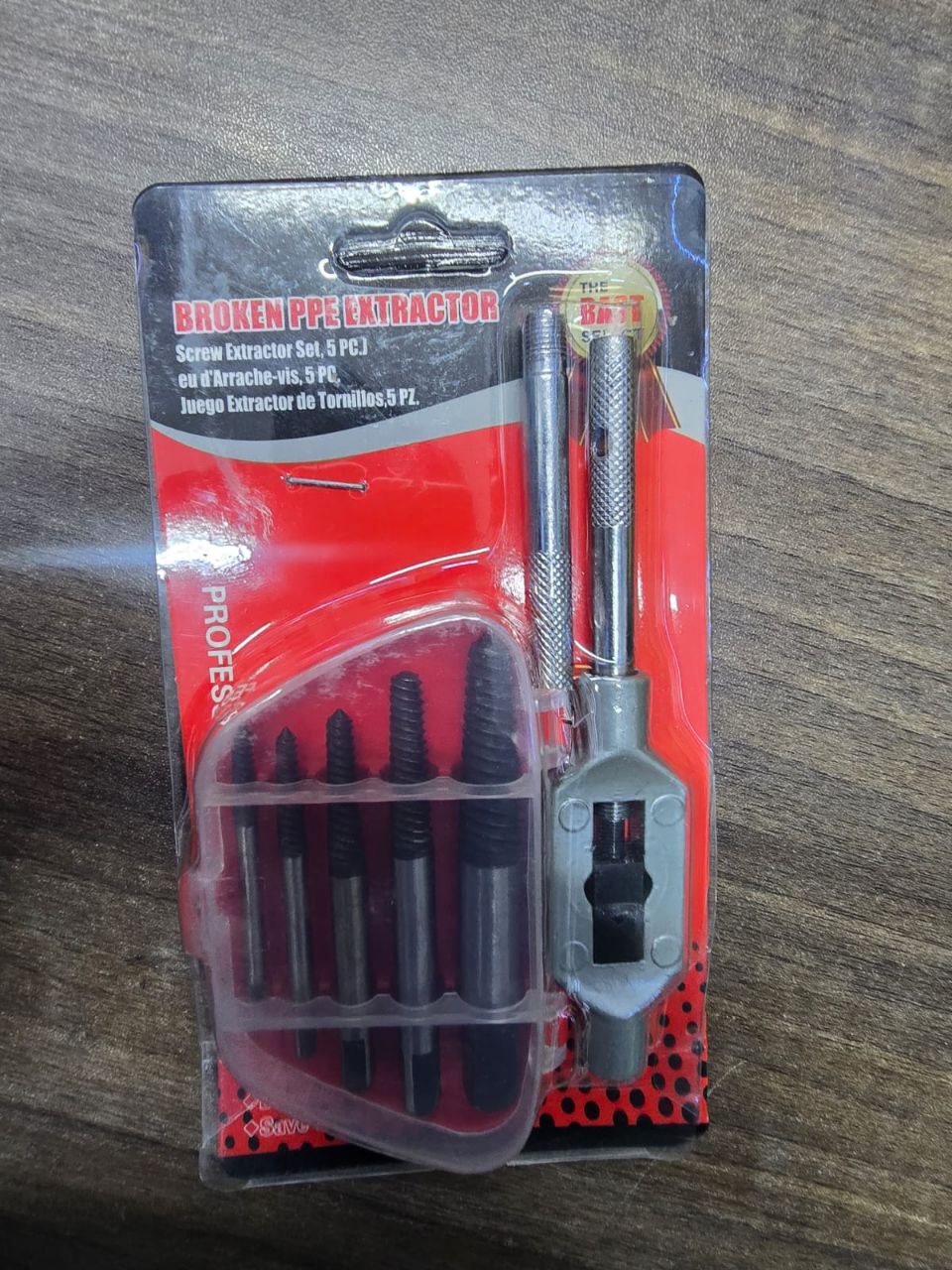
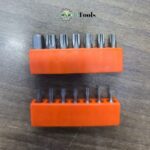

Broken Screw extractor with handle
KSh750.00
Spiral Flute (or “Easy Out”) Extractors:
Appearance: Tapered, with a reverse (left-hand) spiral flute design, much like a left-handed screw.
How it works: You drill a pilot hole into the center of the broken screw. Then, you insert the spiral extractor into the hole and turn it counter-clockwise (either with a tap handle, wrench, or even a drill in reverse). The spiral flutes bite into the material of the screw as you turn, eventually gripping it enough to unscrew it.
Commonly paired with: A T-handle tap wrench or an adjustable wrench. The square end of the extractor fits into the wrench.
Straight Flute (or Multi-Spline) Extractors:
Appearance: Straight, often tapered, multi-splined (many straight flutes) design.
How it works: Similar to spiral extractors, a pilot hole is drilled. The straight extractor is then typically tapped (lightly hammered) into the drilled hole to ensure a secure bite. Once seated, it’s turned counter-clockwise with a wrench or tap handle. The multiple flutes provide more contact points, which can be beneficial for very stubborn fasteners.
A screw extractor (sometimes called a bolt extractor or easy-out) is a hardened steel tool with a reverse (left-hand) helical flute or straight flutes. When screwed or driven into a pre-drilled hole in the center of the broken or damaged fastener, its reverse threads or biting edges grip into the fastener. As you continue to turn it counter-clockwise, it applies torque to the broken fastener, causing it to loosen and back out.
Types of Screw Extractors Often Found “With Handle”
While many extractors are designed for power drills, those specifically marketed “with handle” often come with or are intended for use with manual turning tools. The most common types are:
- Spiral Flute (or “Easy Out”) Extractors:
- Appearance: Tapered, with a reverse (left-hand) spiral flute design, much like a left-handed screw.
- How it works: You drill a pilot hole into the center of the broken screw. Then, you insert the spiral extractor into the hole and turn it counter-clockwise (either with a tap handle, wrench, or even a drill in reverse). The spiral flutes bite into the material of the screw as you turn, eventually gripping it enough to unscrew it.
- Commonly paired with: A T-handle tap wrench or an adjustable wrench. The square end of the extractor fits into the wrench.
- Straight Flute (or Multi-Spline) Extractors:
- Appearance: Straight, often tapered, multi-splined (many straight flutes) design.
- How it works: Similar to spiral extractors, a pilot hole is drilled. The straight extractor is then typically tapped (lightly hammered) into the drilled hole to ensure a secure bite. Once seated, it’s turned counter-clockwise with a wrench or tap handle. The multiple flutes provide more contact points, which can be beneficial for very stubborn fasteners.
- Commonly paired with: A tap wrench, adjustable wrench, or sometimes even a socket wrench (if the extractor has a square drive end).
Why use “with handle”?
- Control and Feel: Using a handle (like a T-handle) gives you much finer control and feel over the amount of torque being applied. This is critical because screw extractors are made of hardened steel and can be brittle. Applying too much force too quickly can cause the extractor itself to break off inside the screw, creating an even bigger problem.
- Preventing Further Damage: Manual operation allows you to feel when the extractor is biting and when the screw starts to turn, reducing the risk of further stripping or damaging the screw remnant or the surrounding material.
- Precision: For smaller, more delicate fasteners, a handle offers the precision needed.
General Steps to Use a Broken Screw Extractor with a Handle:
- Safety First: Always wear safety glasses. Metal shavings and potentially broken bits can be dangerous.
- Center Punch: Use a center punch and hammer to create a small indentation in the very center of the broken or damaged screw. This prevents your drill bit from wandering.
- Drill a Pilot Hole: Select a drill bit that is smaller than the diameter of the screw but appropriate for the extractor size you intend to use (extractor kits usually specify matching drill bit sizes). Drill a straight, clean pilot hole into the center of the damaged screw. Go slowly and use cutting oil for metal screws to prevent overheating the bit and hardening the screw material.
- Insert the Extractor: Choose an extractor that fits snugly into the pilot hole. Tap it gently with a hammer to ensure it bites firmly into the screw material (especially important for straight-flute types).
- Attach the Handle: Secure the handle (T-handle, tap wrench, or appropriate wrench) onto the end of the extractor.
- Turn Counter-Clockwise: Apply firm, consistent downward pressure and slowly turn the handle counter-clockwise. As you turn, the reverse threads or flutes of the extractor will grip the screw, and hopefully, begin to back it out.
- Patience and Lubrication: If the screw is very stubborn (e.g., rusted or seized), apply penetrating oil and let it soak for a while. Sometimes, a gentle back-and-forth motion can help break the bond. Avoid excessive force that could break the extractor.
| Weight | 2 lbs |
|---|
Related products

3 Pcs pliers set
KSh1,850.00
3 Pcs pliers set
KSh2,650.00

Automatic wire striper Total
KSh2,600.00
Brad nail
KSh1,250.00
Combination pliers
KSh1,000.00

Electric soldering iron
KSh1,350.00
Electric soldering iron
KSh1,870.00
Electrode holder
KSh1,650.00
Insulated combination pliers
KSh1,150.00
Planer
KSh1,250.00

Ratchet die stock 1/2 to 2inch
KSh11,500.00
Reviews
There are no reviews yet.